

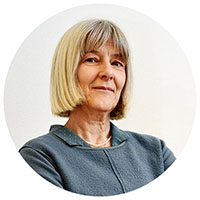
Antje Meyer (Broadbent Prize)
Max Planck Institute for Psycholinguistics, Nijmegen, the Netherlands
Donders Institute for Brain, Cognition and Behaviour, Radboud University, Nijmegen, the Netherlands
Antje Meyer is a professor of psychology at Radboud University and a director of the Max Planck Institute for Psycholinguistics. She is one of the pioneers in the field of speaking and language processing. Her current research is primarily directed at understanding the relationships between comprehension and production processes and the origins of individual differences in linguistic skills in adults. Her work has received several awards, among others from the Economic and Social Research Council and she was elected member of the Royal Netherlands Academy of Arts and Sciences (KNAW) in 2018.
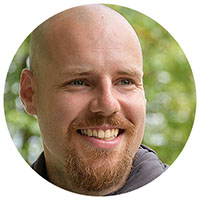
Roland Pfister (Bertelson Prize)
Department of Cognitive Psychology, University of Würzburg, Würzburg, Germany
Roland Pfister is an assistant professor of psychology at the University of Würzburg. He investigates cognition in action, from basic mechanisms of human action control to high-level processes such as rule-breaking and subjective agency. Other recurring themes touch upon research methods and statistics, as well as (pre-)history of psychology. His work has received several awards, among others from the Psychonomic Society and the German Psychological Society.
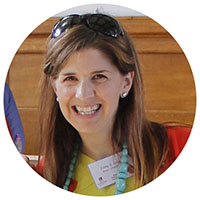
Emily Cross
Institute of Neuroscience and Psychology, School of Psychology, University of Glasgow, Glasgow, Scotland, UK
Department of Cognitive Science, Macquarie University, Sydney, New South Wales, Australia
Emily Cross is a professor of social robotics at the University of Glasgow and a professor of human neuroscience at Macquarie University. She addresses how experience shapes perception and isespecially interested in how we learn new physical skills by watching others, how action expertise is manifested in the brain, the neural foundations of art appreciation, and how learning shapes our social encounters with artificial agents. She managed an ERC Starting Grant (ERC-StG-2015 SOCIAL ROBOTS)in 2015 and she has recently received the 2018 Philip Leverhulme Prize.
Mechanisms and Consequences of Attributing Socialness to Artificial Agents
Abstract: In daily life, we learn a considerable amount by watching and physically engaging with others. Underpinning this ability is a network of brain regions implicated in a direct matching process that enables shared representations between self and other. Traditional views of this network assume a matching process biased towards familiar actions and human agents. However, emerging work from my social neuroscience research team is challenging and extending this dominant theoretical perspective by testing what happens when we engage with unfamiliar actions or artificial agents, such as robots or avatars. In this talk, I outline past, present and future perspectives of how neurocognitive approaches can advance our understanding of social learning, with a particular focus on the factors shaping human—robot interactions. The implications of this work range from a deeper understanding of human brain plasticity to the optimisation of human encounters with artificially intelligent social agents.
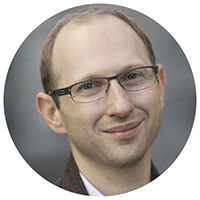
David Sander
Swiss Center for Affective Sciences, University of Geneva, Geneva, Switzerland
Department of Psychology, University of Geneva, Geneva, Switzerland
David Sander is a professor of psychology at the University of Geneva and the director of the Centre Interfacultaire en Sciences Affectives, and of the National Center of Competence in Research in Affective Sciences. He is mainly interested in the brain and cognitive mechanisms involved in emotion elicitation, and how these mechanisms modulate attention, memory, and decision-making. For his work,he was awarded the 2013 National Latsis Prize and his work has received several awards, among others from the Swiss National Science Foundation.